
THE STORY
Difficult situations aren’t always as straightforward as they first appear.
I help people understand the dynamics shaping difficult situations so they can respond with greater judgement and stop participating in patterns that keep those situations going.
15+
Years working with professionals
1000s of Hours
Analysing workplace situations
1000s of Hours
Coaching & advisory work
Author
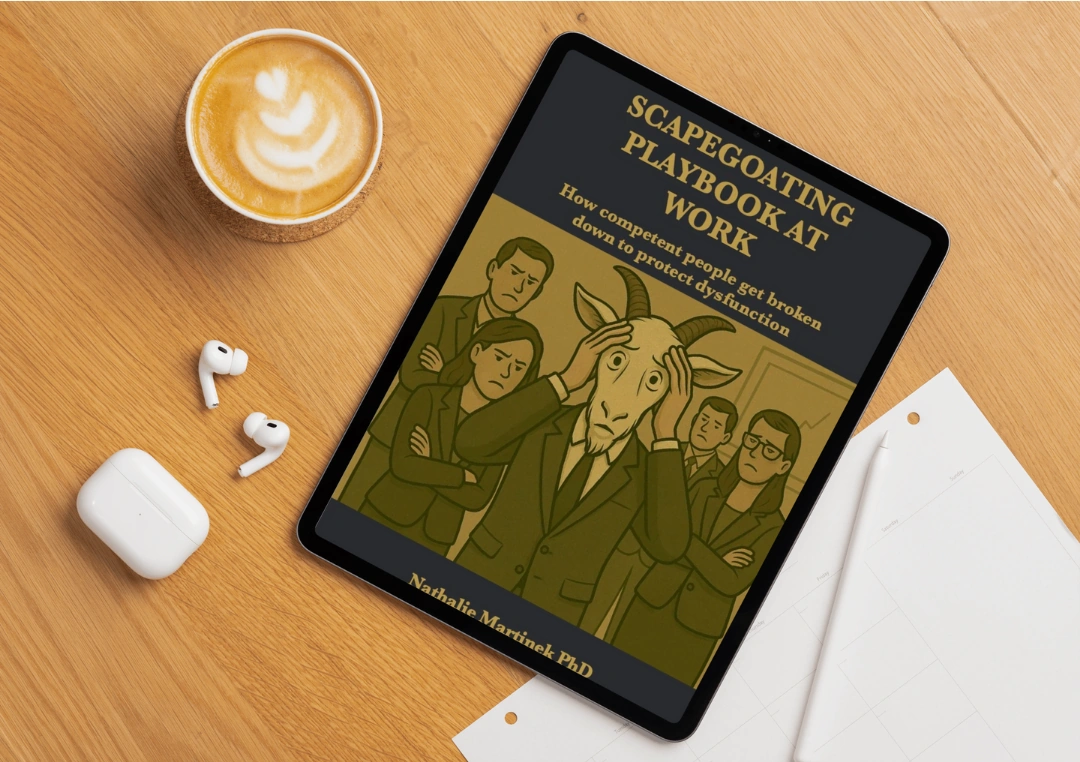
The Little Book of Assertiveness · The Scapegoating Playbook at Work
Where it began
I thought hard work would be enough
Like many people, I entered professional life believing that if you worked hard, acted with integrity, communicated openly, and cared about other people, things would largely work out.
My career began in science. As a developmental biologist and cancer researcher, I spent years studying how behaviour is shaped by environment. Cells with the same genetic instructions can behave very differently depending on the conditions around them.
Over time, I began to notice a similar pattern in my own working life. The behaviours that helped me succeed in one environment became liabilities in another. The same person could be viewed as capable, difficult, collaborative, threatening, valuable, or expendable depending on the environment they were operating within.
As I looked around, I realised I wasn't alone. Intelligent, capable people were having similar experiences. They could thrive in one environment and struggle in another, often without understanding why.
“People often questions themselves when they should be questioning the system.”
The journey
The lesson I wasn’t taught
For a long time, I believed workplaces operated according to the rules most of us are taught. Work hard. Be helpful. Communicate openly. Do good work. Trust the process.
Those rules aren’t wrong, but they’re incomplete.
Many people spend years improving skills, confidence, communication, and leadership without realising they’re operating inside environments that reward opportunistic behaviour.
SEARCHING FOR ANSWERS
The patterns started to surface
I spent years trying to understand situations that didn't make sense. Why did some people lose influence despite doing good work? Why did feedback sometimes arrive long after decisions had already been made? Why did some people become isolated while others seemed protected?
The more attention I paid, the more I noticed that similar dynamics appeared across different organisations, professions, and industries.
People were often trying to solve the most visible part of a problem while something more important remained hidden beneath it. They focused on the conversation while overlooking the relationships, incentives, and pressures shaping the situation.
Once those dynamics became visible, situations that'd seemed confusing often started to make more sense.
SOMETHING WAS OFF
For years, I assumed the problem was me.
When situations became difficult, I worked harder. When relationships changed, I looked for flaws in my own behaviour. When things stopped making sense, I searched for answers within myself before questioning the environment around me.
The more attention I paid, the more I realised that many of the signals I interpreted as personal failure were telling me something else. Competent people often spend years trying to fix themselves when the real problem lies in how they’re interpreting the situation around them.
“Competent people often spend years trying to fix themselves when the real problem lies in how they're interpreting the situation around them.”
The turning point
I had to look at my own role
The more I tried to understand difficult workplace situations, the harder it became to ignore my own contribution to them. I realised I’d started behaving like some of the people I criticised, contributing to some of the situations I was complaining about, and expecting workplaces to operate according to rules that many other people weren’t following.
Many people can describe exactly what someone else is doing wrong while remaining completely unaware of the habits that keep them trapped in the situation.
Examining other people’s behaviour was relatively easy. Examining my own motives, ambitions, expectations, insecurities, and blind spots proved far more useful.
A method emerges
Patterns that once seemed unrelated became easier to recognise
As people started bringing me their situations, I noticed that many of the same themes kept appearing. Different organisations, professions, and circumstances often produced remarkably similar patterns.
The details varied, but the underlying dynamics were often familiar. Situations that appeared unique frequently followed patterns I'd seen before.
Each new situation gave me an opportunity to refine my analysis and advisory process. Over time, patterns that once seemed unrelated became easier to recognise.
Today, I help professionals identify the dynamics shaping a situation so they can make more informed decisions about how to respond.
Across professions and industries
I’ve worked with clinicians, academics, researchers, lawyers, consultants, public servants, executives, managers, and professionals across healthcare, universities, government, community services, not-for-profit organisations, and private industry.
Working across different industries taught me that difficult situations aren’t usually unique. Different professions use different language, structures, and norms, yet many of the underlying dynamics remain remarkably similar.
I would highly recommend her support to anyone navigating workplace challenges, particularly those working in the DEI space. I’ve never regretted the investment. The return has been invaluable.”
Dr Rupi Legha
Child, Adolescent and Adult Psychiatrist
Common questions
Before you decide.
Can’t find your answer? Reach out directly and I’ll get back to you.
Ready to get started?
Gain insight into the situation you're dealing with and receive a personalised recommendation for the next step.